Analyzing biomechanical sensor data from equine training regimens to inform predictive models in international thoroughbred wagering circuits
Rafael Lange · Sep 30, 2026

Analyzing biomechanical sensor data from equine training regimens to inform predictive models in international thoroughbred wagering circuits
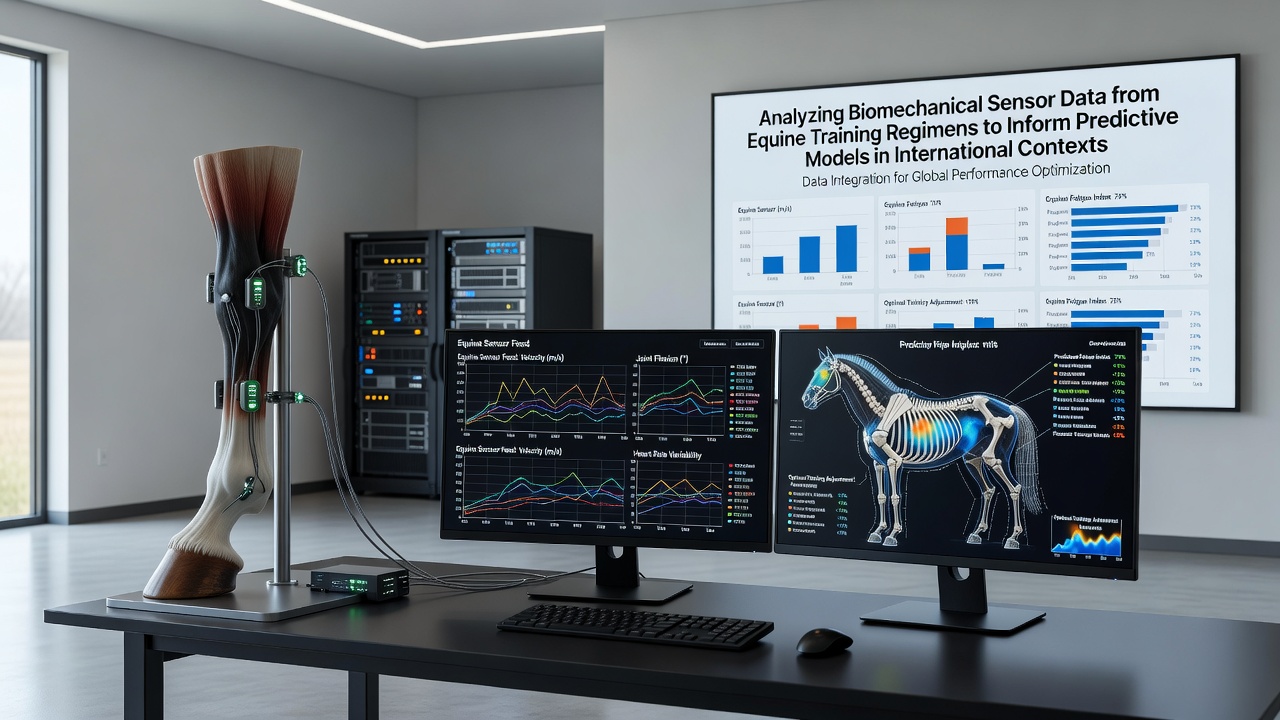
Thoroughbred training programs now incorporate wearable sensors that track stride length, acceleration patterns, and joint flexion across multiple sessions, while data streams feed directly into algorithms designed to forecast race-day performance across global circuits. Researchers at institutions focused on equine sports science collect these readings through devices placed on saddles, girth straps, and limb wraps, which record metrics at frequencies reaching 100 hertz during gallops and breezes. International wagering markets respond to model outputs that translate such measurements into probability adjustments for upcoming events, particularly in jurisdictions where operators integrate third-party analytics into odds compilation.
Sensor Technologies and Data Collection Protocols
Accelerometers and gyroscopes mounted on the horse capture three-dimensional movement data, whereas GPS units log velocity changes over set distances and heart-rate monitors record cardiovascular responses to varying workloads. Trainers in Australia and the United States routinely upload sessions to centralized platforms that standardize variables such as peak force per stride and recovery intervals between repetitions. Studies conducted by university veterinary departments show that consistent collection over eight to twelve weeks produces datasets large enough for machine-learning models to identify deviations from an individual horse's established baseline. Racing Australia has documented how these protocols align with regulatory requirements for animal welfare monitoring, which in turn supports the reliability of downstream performance forecasts.
Integration into Predictive Modeling Frameworks
Analysts combine biomechanical outputs with traditional handicapping factors including past race times, track conditions, and jockey statistics to build ensemble models that estimate finishing positions. Neural networks process sequences of training data to detect subtle declines in stride efficiency that may precede performance drops, while regression trees isolate interactions between variables such as incline work and subsequent speed figures. In September 2026 several European and North American operators began testing live feeds from training centers to update model weights within 24 hours of each recorded session. The Jockey Club maintains open data repositories that allow model developers to validate predictions against verified race results, thereby refining feature selection and reducing variance in projected margins.
Applications Across International Wagering Markets
Bookmakers in Australia and Hong Kong incorporate model-derived probabilities when setting morning lines for international group races, adjusting odds when sensor data reveals atypical training loads or recovery patterns. Parimutuel systems in Japan and France receive aggregated inputs that influence pool distributions for exotic wagers, because the underlying algorithms flag horses whose biomechanical profiles diverge from historical norms. Observers note that syndicates operating across multiple jurisdictions subscribe to commercial platforms that deliver standardized reports, enabling coordinated position sizing based on shared data interpretations. Regulatory frameworks in these regions require transparency around data sources, which encourages operators to disclose when sensor-derived variables contribute to final pricing.
Validation Studies and Accuracy Metrics
Peer-reviewed papers from veterinary colleges report that models augmented with biomechanical variables achieve lift over baseline statistical approaches when tested on held-out race samples from major tracks. One longitudinal analysis examined 1,200 training sessions paired with 450 race outcomes and found measurable improvements in ranking accuracy after inclusion of limb kinematics and heart-rate variability. Cross-validation across seasons demonstrates stability, although performance varies by surface type and distance category. Industry groups such as the International Federation of Horseracing Authorities have begun publishing guidelines that standardize variable definitions, which facilitates comparison of model performance between different training centers and wagering jurisdictions.
Challenges in Data Standardization and Model Deployment
Differences in sensor calibration between manufacturers introduce noise that requires preprocessing steps before model training, while variations in track surfaces and training regimens across countries complicate direct transfer of learned patterns. Privacy regulations in some jurisdictions limit the sharing of individual horse identifiers, prompting development of anonymized aggregate datasets for collaborative research. Modelers address these issues through domain adaptation techniques that normalize distributions before feeding data into shared predictive engines. Ongoing work at research centers focuses on real-time edge computing that can deliver updated probabilities to wagering platforms without transmitting raw sensor streams across borders.
Conclusion
Biomechanical sensor integration into thoroughbred training analytics continues to expand as hardware costs decline and regulatory acceptance grows. Predictive models that draw on these streams now inform odds compilation in multiple international markets, supported by validation frameworks that track performance against actual race results. Continued refinement of data protocols and cross-jurisdictional standards will determine how widely these methods influence future wagering circuits.